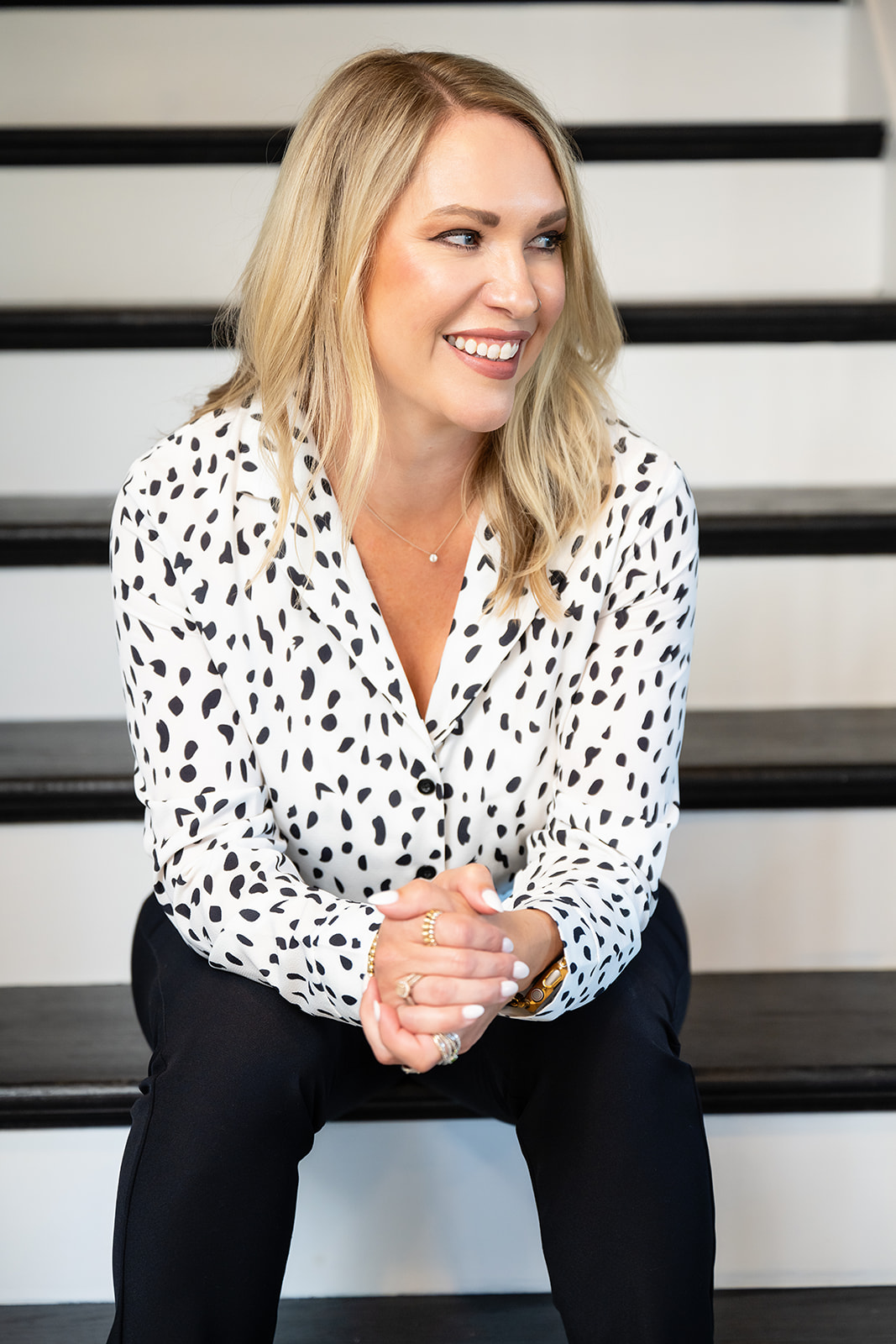
Randy Lane
Real Estate Agent
He went to Best Buy to pick out appliances for the house he had just bought. The young woman working the floor asked the usual questions, new build or remodel, and when he told her he had just closed on a home, she said she wished she could buy one. So he asked her why she couldn't. She gave him fifteen reasons. Not one of them was true. Four months later she closed on her first house. That house became her first rental. She owns two more properties now. The woman who was tired of selling appliances to people who could buy homes is a real estate investor today, because a stranger needed a refrigerator and asked her one honest question. That is Randy Lane's whole business in one story.
Randy Lane, Randolph Lane Jr. on paper, started in real estate in February 2017, but he had been circling houses his entire life. His father was a builder. Randy grew up looking at homes he could not afford, and he looked at them the way other kids study baseball cards. Close. Repeatedly. Until he could describe every one of them in the dark. The house he lives in now is one of the houses he used to drive past and wonder about. He served in the United States Marine Corps first, and that is where the spine of this business came from. Preparation matters. Details matter. When people are counting on you, you show up. He also spent years living overseas in Italy, off base and out in town, where almost nobody spoke English and he had no choice but to learn the language if he wanted groceries, dinner, or a conversation with the people next door. He learned Italian out of necessity. He kept it out of friendship. Those neighbors have flown to Virginia to visit him. After the Corps came hospitality, then a career in specialty pharmaceuticals and pharmaceutical sales. Hospitality is the part that stuck. It taught him to anticipate what somebody needs before they say it, to catch the details other people walk past, and to make an experience feel effortless while a considerable amount of work is happening out of view. Then came a divorce, and the drift that followed it. He calls that season the thing that taught him the most. Adversity is not the question, he will tell you. Getting through it is not really the question either, because you will get through it. How you come out of it is the only part that belongs to you. Taking care of people is what carried him out. Helping is how you heal. When you help somebody feel better, you feel better, and that keeps going.
Real estate, the way Randy runs it, is just hospitality applied to houses. Quiet luxury with a southern accent. The same instinct that had his family cooking Thanksgiving dinner for everybody else's people because they had the bigger house. Randy is a listing agent by preference and a problem solver by nature. He likes the challenge of earning a listing, positioning a home, and standing in the middle of a negotiation where two parties are convinced they are further apart than they really are. A home should be positioned, he believes, not just placed on the market. Pricing, presentation, photography, marketing, buyer psychology, the showing experience, the negotiation. All of it is one strategy or none of it works. So he starts the same way every time. Understand the property. Understand what it is competing against. Identify the buyer who is actually going to want it. Then build the plan that protects the seller from preparation through closing. But his real specialty is the thing he did in that Best Buy. He helps people buy homes they were told they could not have. Not by stretching them underwater, and not by talking them into anything. By showing them what is actually available to them. Most buyers settle for something smaller than they could reach because nobody ever told them the truth about how a deal can be structured. Seller credits. A price adjusted and dollars negotiated back at closing. Two thousand dollars that stands between a family and the right house, solved in a phone call. Buyers do not know they can ask. Randy asks.
Which is why he pushes back on the word sell. "I am not selling anybody a house," he says. "I am helping somebody make a decision." So instead of talking a buyer into a property, he walks them through it honestly. Condition. Function. Location. Lifestyle. What it will be worth later and who it will sell to next. Nobody is buying bedrooms and bathrooms and square footage. They are deciding where their life is going to happen. That decision deserves better than a sales pitch. A well presented home sells itself. His job is to prepare it so it can, and then to get the people out of their own way long enough to let a good decision happen. He is not attached to the transaction, and that detachment is the most valuable thing he brings to a table full of people who are attached to everything. Specialties: home listings and seller representation, first time buyers, buyer strategy and creative deal structure, move up buyers, new construction in Suffolk, investment and rental property, military and veteran clients, relocation to Hampton Roads.
Randy lives in Suffolk and works Suffolk every day, which means he is not reading about the growth out there, he is driving through it. Suffolk has become a destination city. People are moving here from other Hampton Roads cities on purpose, and the development has followed them. New rooftops keep going up, including a two hundred home project across the street from where he lives. Every one of those homes will trade someday, and Randy intends to be the agent standing there when it does.
Ask him why buyers keep choosing this region and he does not reach for a statistic. He tells you that you can get to almost anything from here and still come home to quiet. An hour or two from the good stuff without living in the middle of the good stuff. Cost of living that makes sense. Good schools. And every kind of life available inside one region, rural to waterfront to downtown to a condo over a mall, all of it still Hampton Roads. He is from here. He has never understood why anyone would want to be anywhere else. Randy's strongest year to date closed sixteen homes. His largest sale, a 1.3 million dollar property in Ocean View, went to a client he had already sold a primary residence to, and then a beach house, and then a listing after that. That is the pattern worth noticing. He does not run through clients. He keeps them. He is candid about the rest of it. He has never chased a plaque. For most of his career the goal was self sufficiency, and he hit it. What changed is a twelve year old boy upstairs. Randy is building something substantial now because he wants to leave his son something that can carry itself, whether the kid ever wants it or not.
He joined The Verity Group for the blueprint. Heather and Steve Heishman have built one of the top producing teams in Hampton Roads, with agents collectively closing hundreds of homes a year, and Randy came for the system behind that number. He also came for the room. He describes the team as looking like a Crayola box right now, agents from all kinds of backgrounds and cultures building something together, and he loves that. One promise, and he does not move off of it. The poorest client buying the humblest home gets exactly the same experience as the wealthiest client buying the grandest one. Same preparation. Same negotiation. Same phone calls returned. Period. Verity means truth, and Randy's version of it is simple. He does not have a filter. A friend once nicknamed him WYSIWYG, an old coding term for what you see is what you get. It took him five years to figure out it was a compliment. Clients call him loquacious. One told him he had a serious case of diarrhea of the mouth, which he considered fair. You will not wonder what Randy thinks. That is the point.
Randy gives to the causes that found him personally. Cancer advocacy. Down syndrome, because his brother has it. The Boy Scouts, because he was one and his son is one. Homelessness, because he cannot make peace with the math of empty houses and people without them. Mental health, because he believes it sits underneath most of the homelessness. Veterans, because he is one, and disabled veterans in particular, because a country that can build aircraft carriers can take care of the people who served on them. Animal welfare, because meanness toward animals sits wrong with him. Home is his wife Kenya Harris, a pharmacist, his daughter Cydney, twenty seven, and his son Grayson, twelve. Then there is George, the family's white Bull Terrier, not quite two years old, who has never once been left out of a conversation and does not intend to start now. He cooks. He eats. He travels when he can. He watches Formula 1 with real devotion, practice sessions included. His grandfather was a Baptist minister who pastored two churches. Randy was raised Southern Baptist, still is, and will be the first to tell you he is not the most devout man in the pew. But everything that man taught him became the moral compass he still runs on, and he passes it to his kids the way it was passed to him. He opens doors for older ladies. He says his prayers at night. His son still says grace.
Ask him to sum himself up and he laughs at the question. An old guy trying to stay young and stay on the straight and narrow, and get his kid on the same path. Then he gets quieter about it. He is starting to understand his own mortality. He does not fear it and he does not dwell on it, but it has him writing things down now that never would have crossed his mind at twenty five. It has him building something instead of just working. He says he is turning into his father, and that his father turned out to be a better man than he gave him credit for.
That is usually how it goes.